Dominion'26: This Is What the New Internet Looks Like

By Fred Hsu, CEO & Co-Founder, D3
Last year at Dominion 2025, we put a name to what we’d been building: DomainFi. We launched Doma Protocol, closed a $25M Series A, and made the case that domains could be more than static assets - liquid, programmable assets that connect the internet’s existing infrastructure with what’s being built next.
This year, we came back to Las Vegas to show that it's real.
Dominion 2026 wasn't a pitch. It was a proof point.
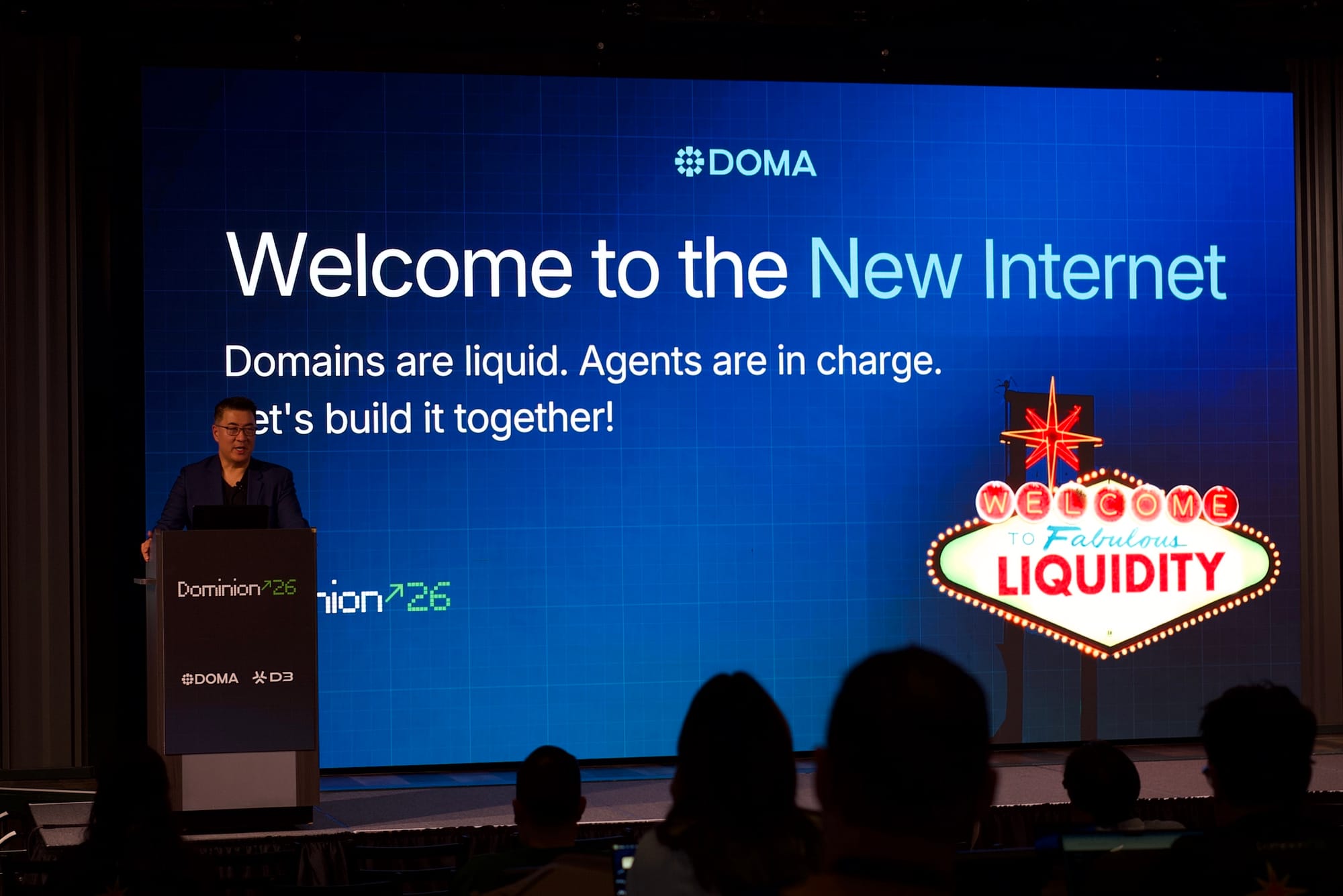
Day One: Welcome to the New Internet
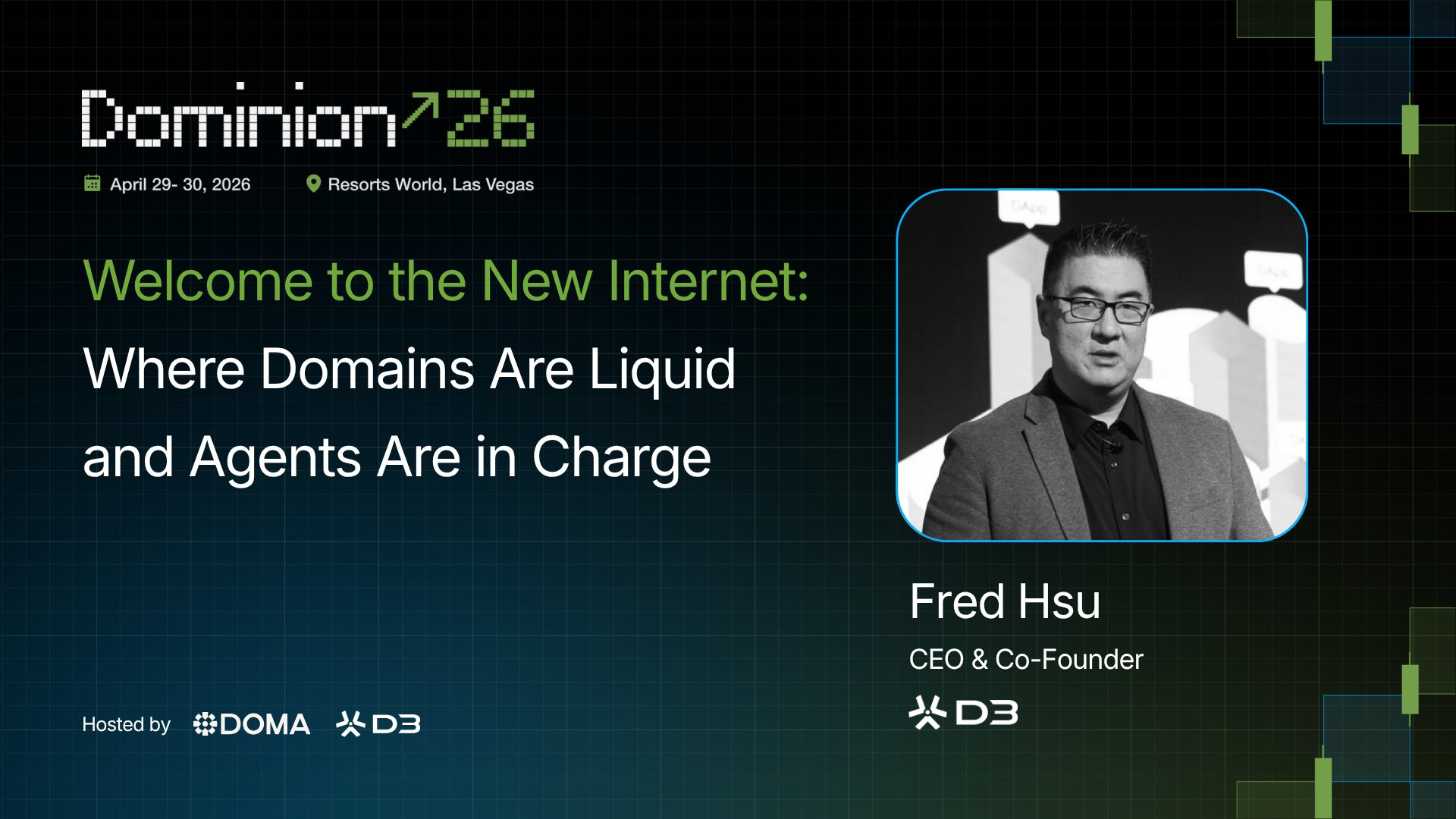
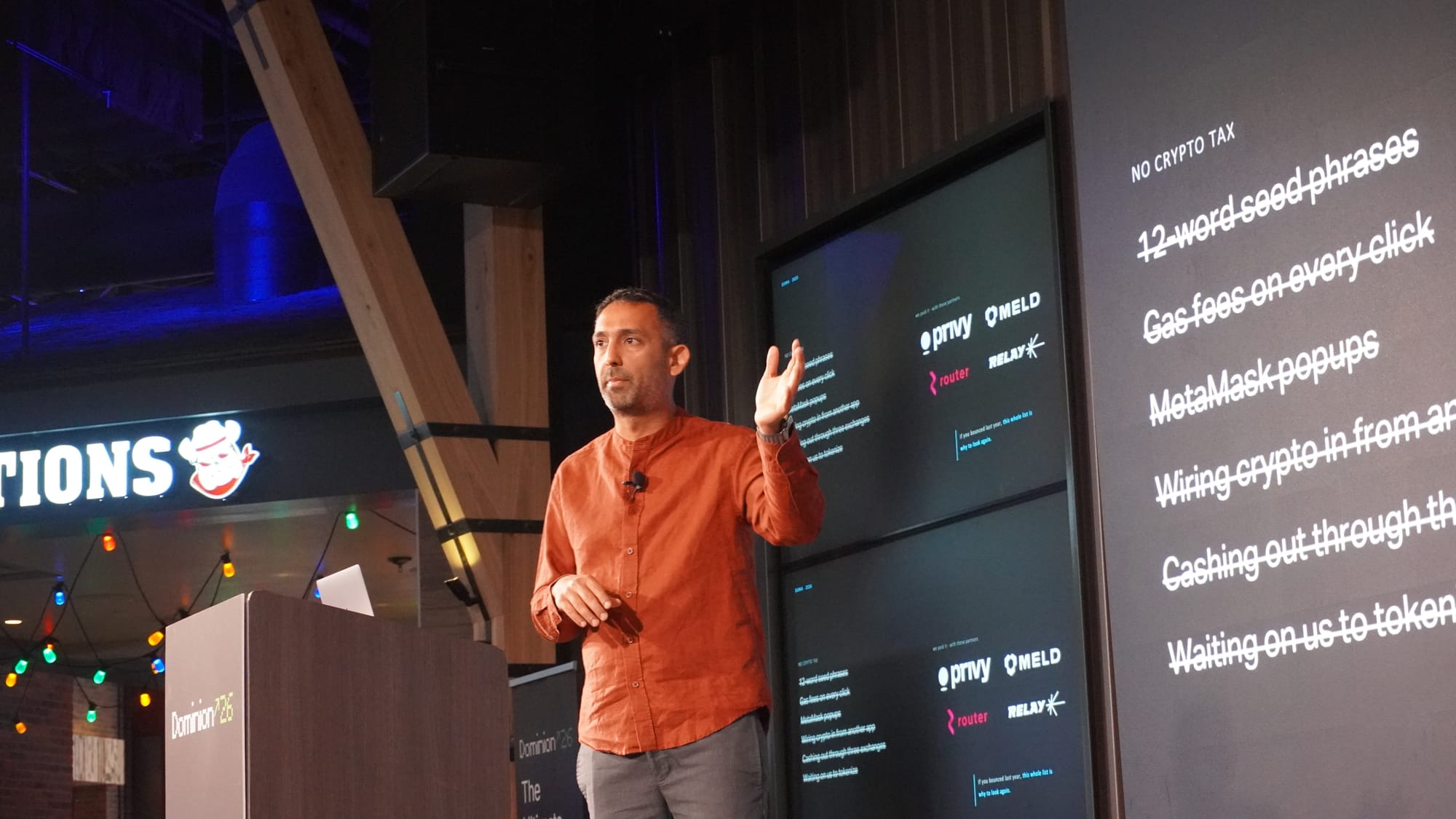
I opened the conference with a keynote that set the tone for everything that followed: Welcome to the New Internet: Where Domains Are Liquid and Agents Are in Charge.
It wasn't a statement about what's coming. It was a statement about what has already arrived.
The domain industry has always understood the intrinsic value locked in premium names: .com, .ai, .xyz. What it has lacked is the infrastructure to make that value accessible, tradable, liquid and programmable at scale. I think my message was clear: that infrastructure now exists, and it's called Doma.
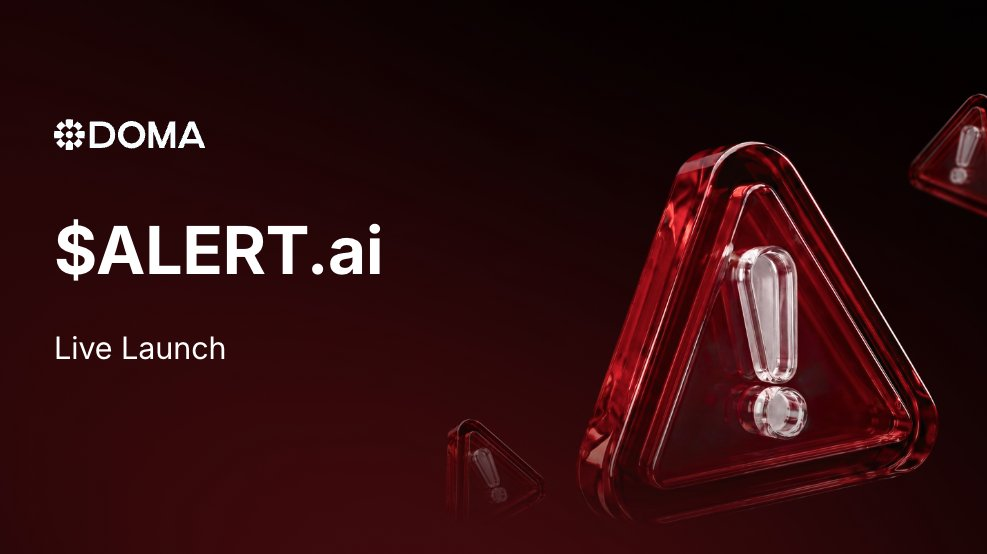
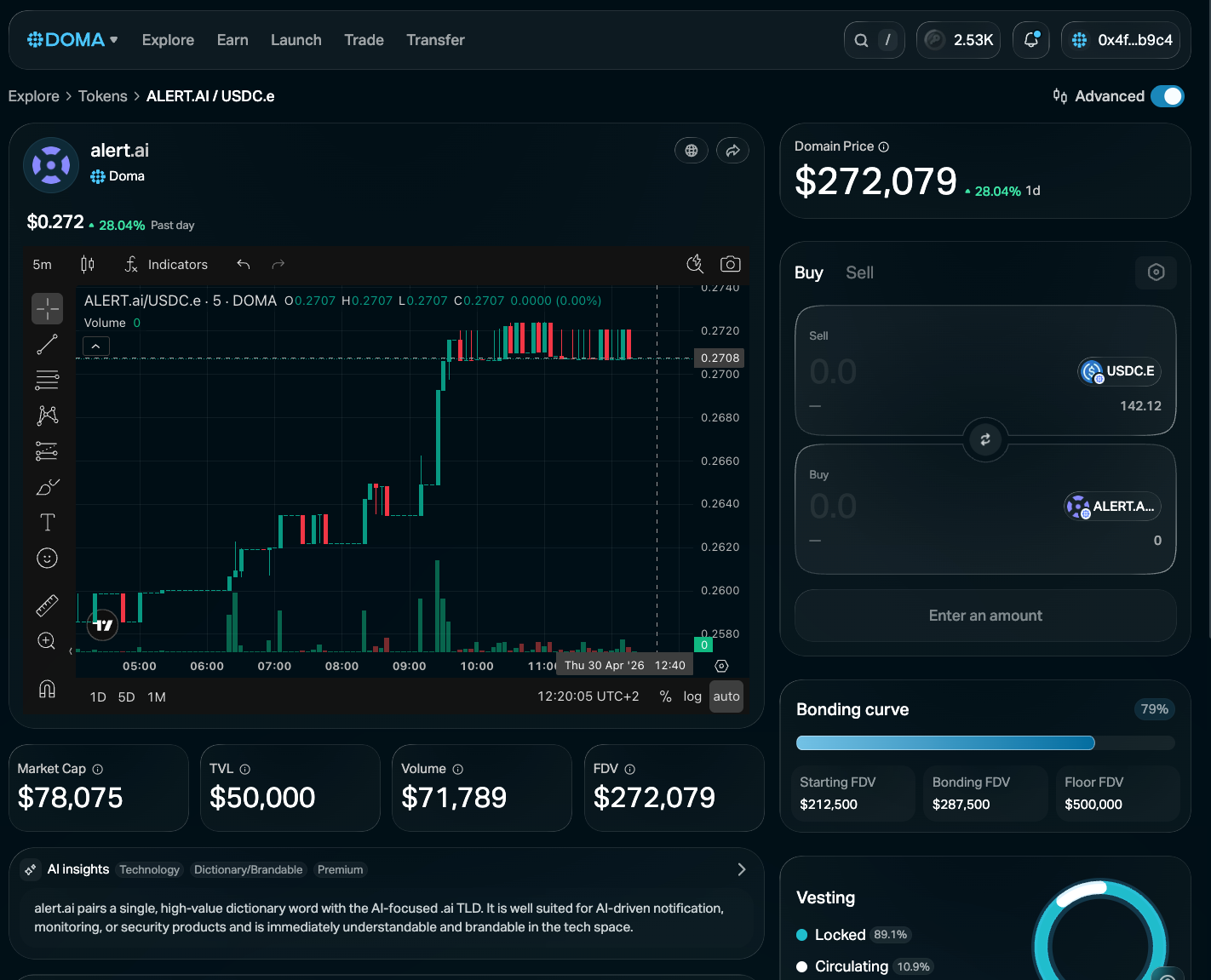
Midway through the keynote, the stage went live. Alert.ai - a premium domain, owned by Braden Pollock - launched live on Doma in real time, in front of the room. No demo environment. No mock-up. A real asset, tokenized and live, in front of an audience that included some of the most experienced domain investors and operators in the world.
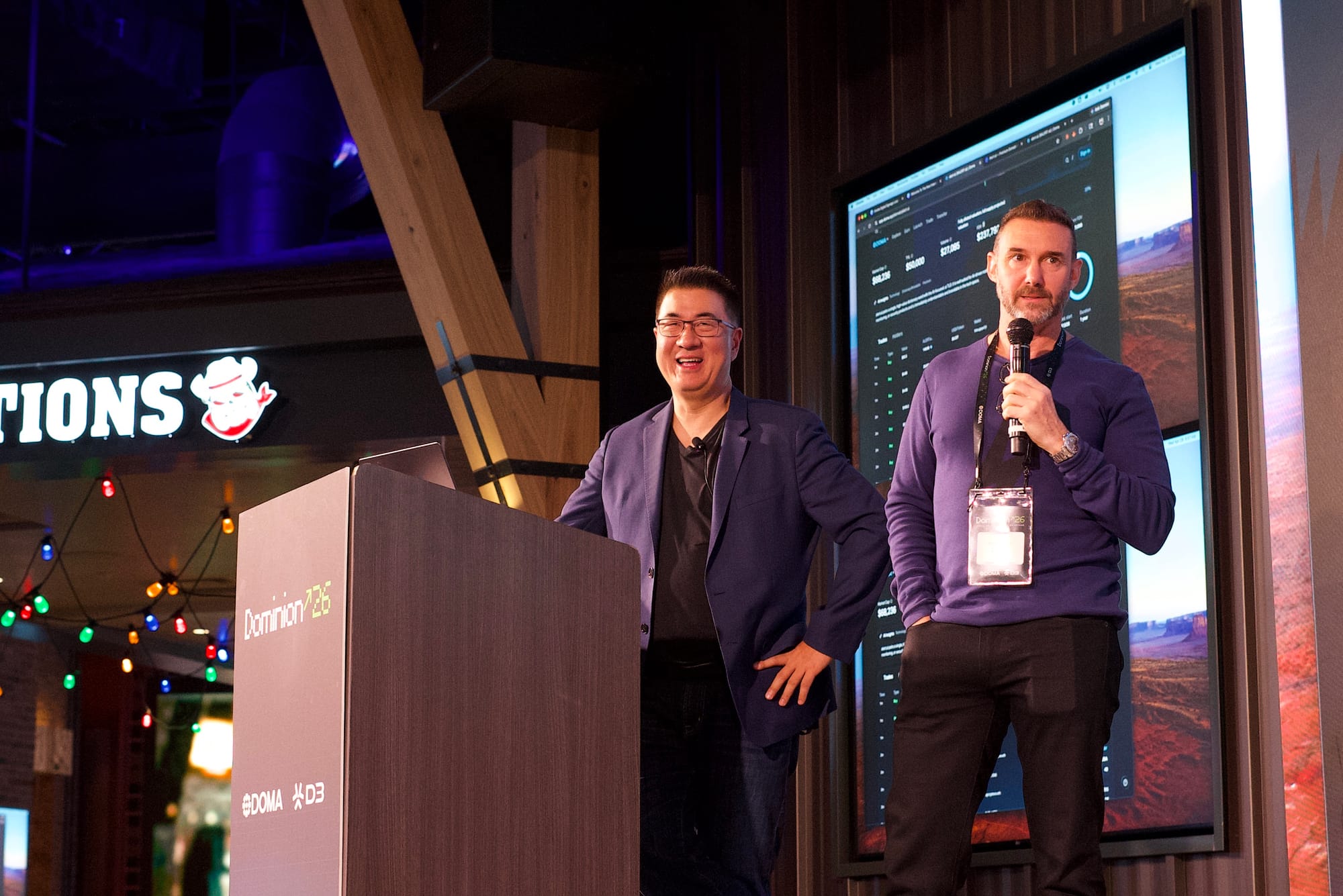
That moment told the story better than any slide deck could.
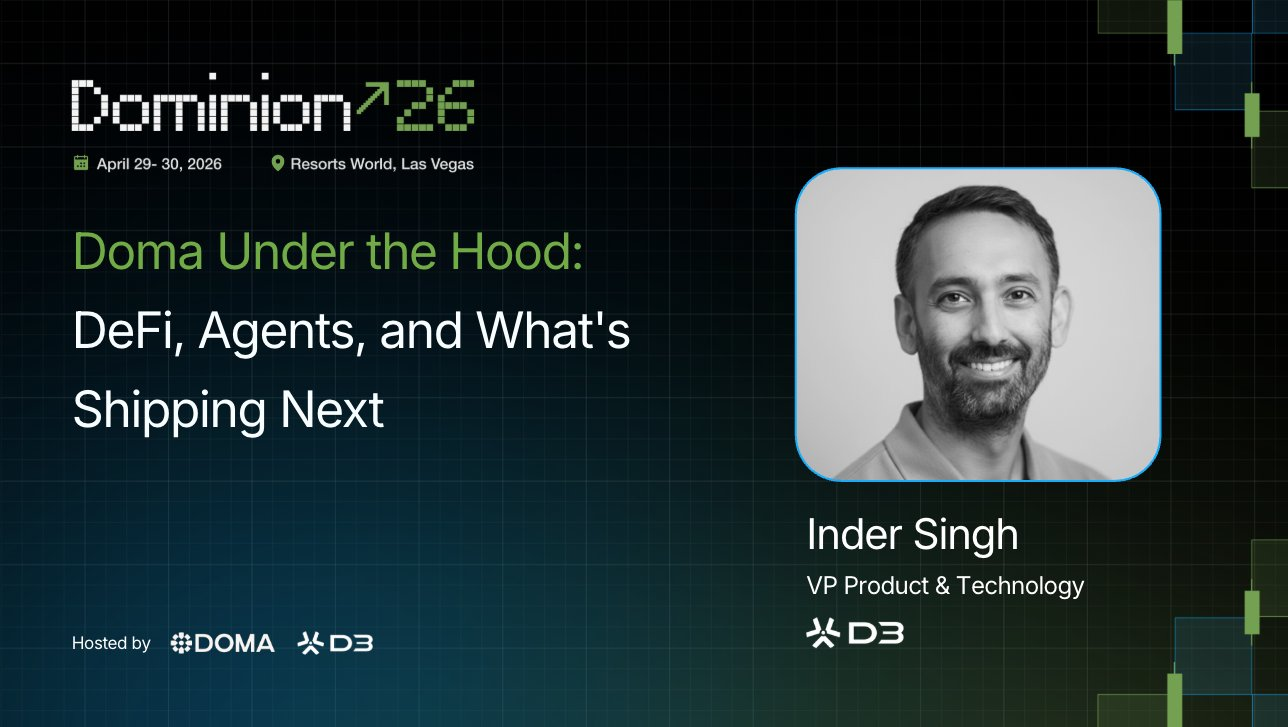
Inder Singh, our VP of Product & Tech followed with a technical deep-dive on what Doma is actually shipping and used the session to launch two new products:
Domain Asset Vehicles (DAVs) (dav.doma.xyz) a first-of-its-kind structure for bringing premium domain portfolios onchain. Owners can apply to tokenize their portfolio; investors can join the waitlist for curated domain exposure.
Doma Agentic Engine (ai.doma.xyz) built for the agentic Internet. It helps domain owners understand how AI agents perceive their domains, identify missing signals, and get their assets ready for a world where agents, not browsers, are how the Internet gets navigated. Apply for the waitlist here.
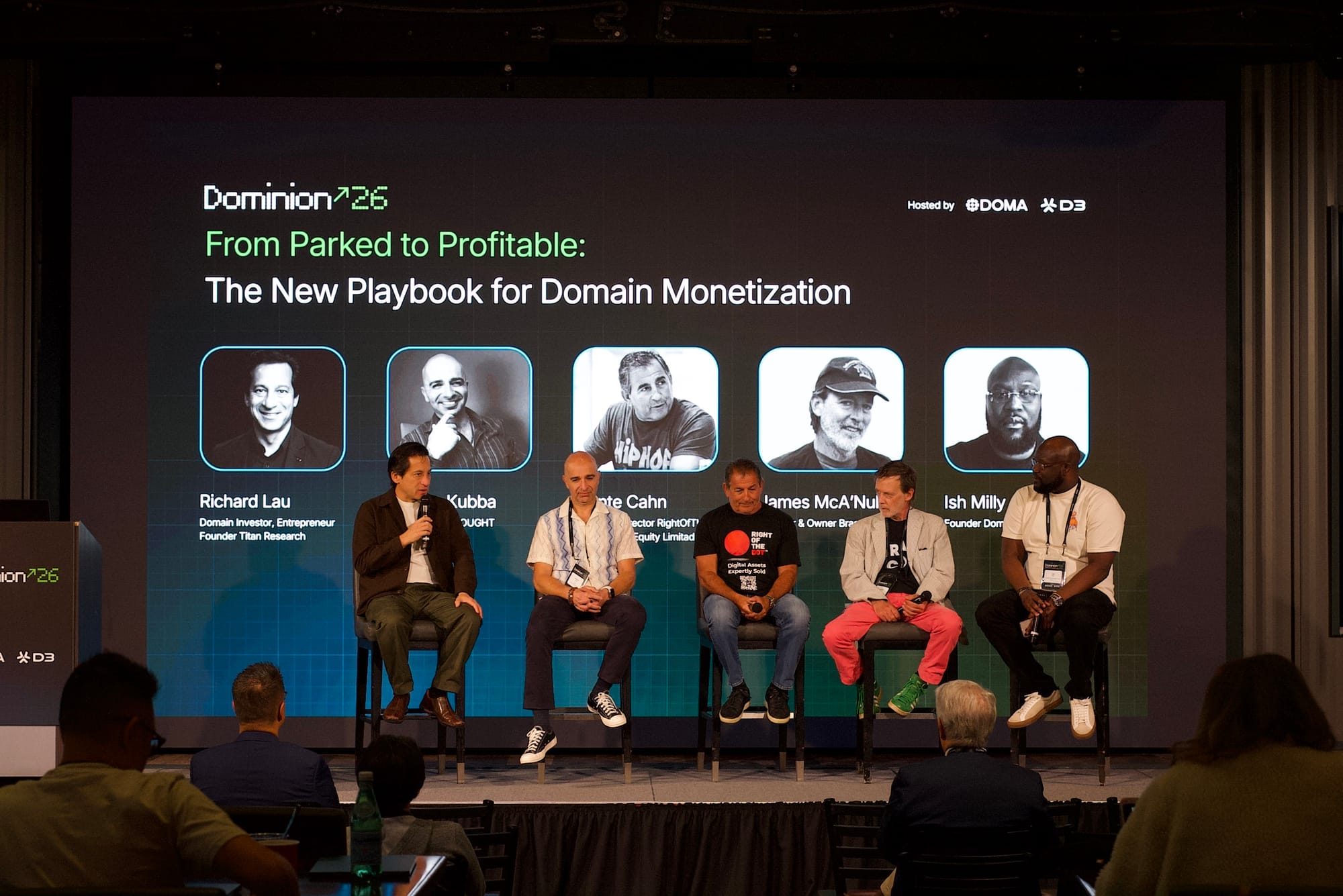
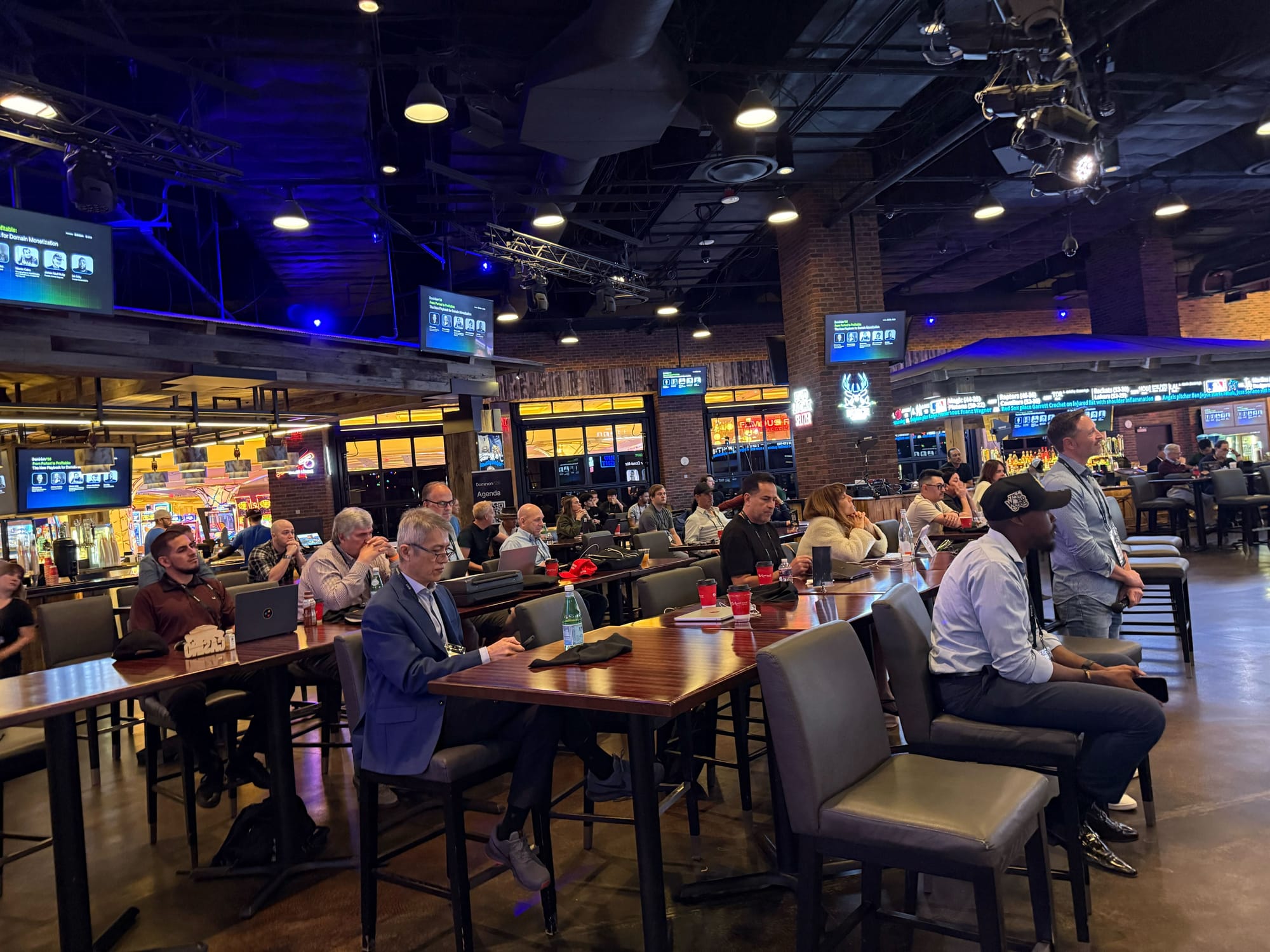
The first panel — From Parked to Profitable — brought together Richard Lau (Titan Research), Monte Cahn (RightOfTheDot), Ammar Kubba (afterTHOUGHT), James McA'Nulty (Owner Brag.com) and Ish Milly (Founder, DomainerEXPO) for a candid look at how DomainFi rewrites the monetization playbook.
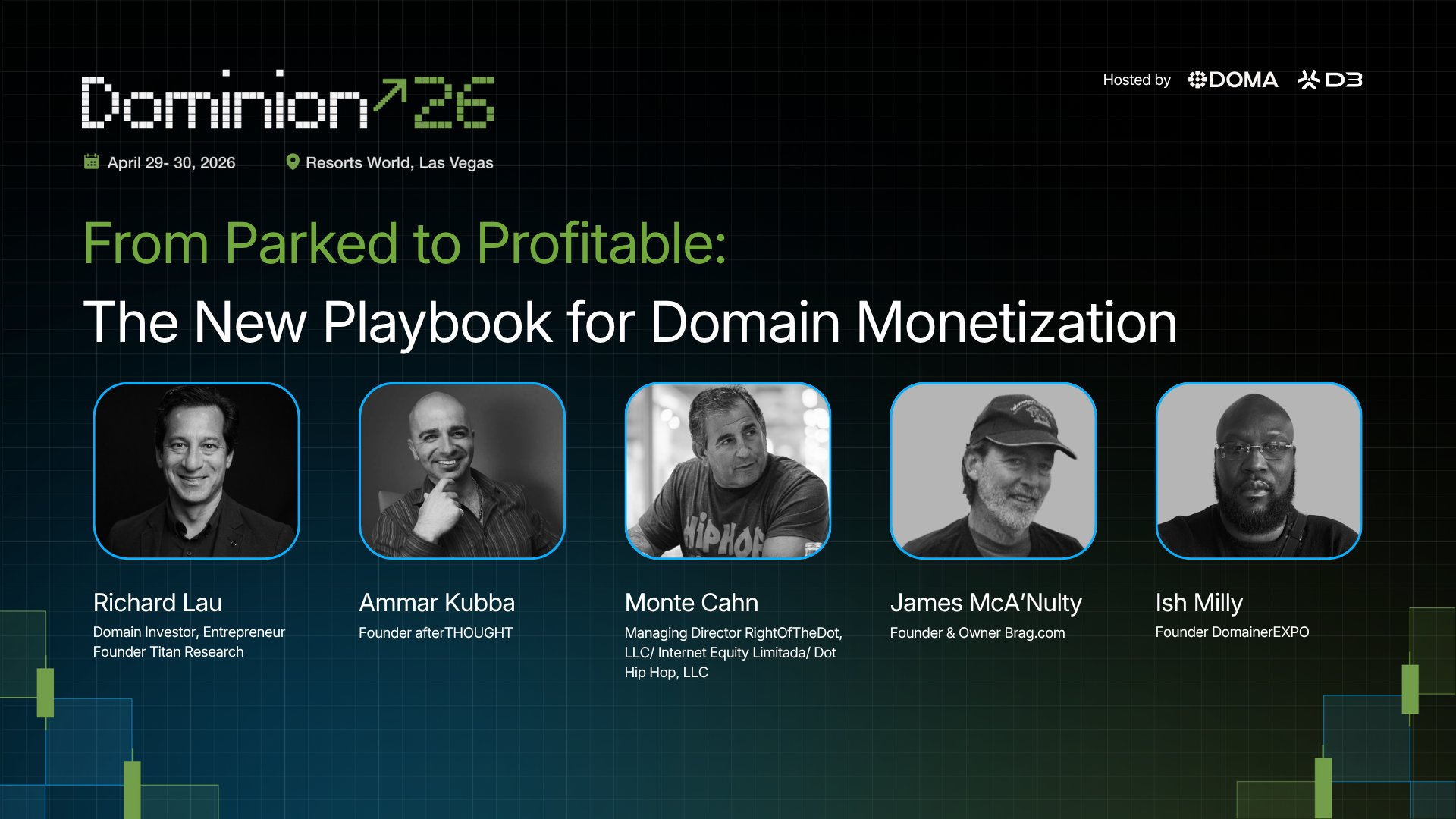
Fractional ownership, instant liquidity, new buyer pools, the infrastructure is finally catching up to what the domain market has always been worth.
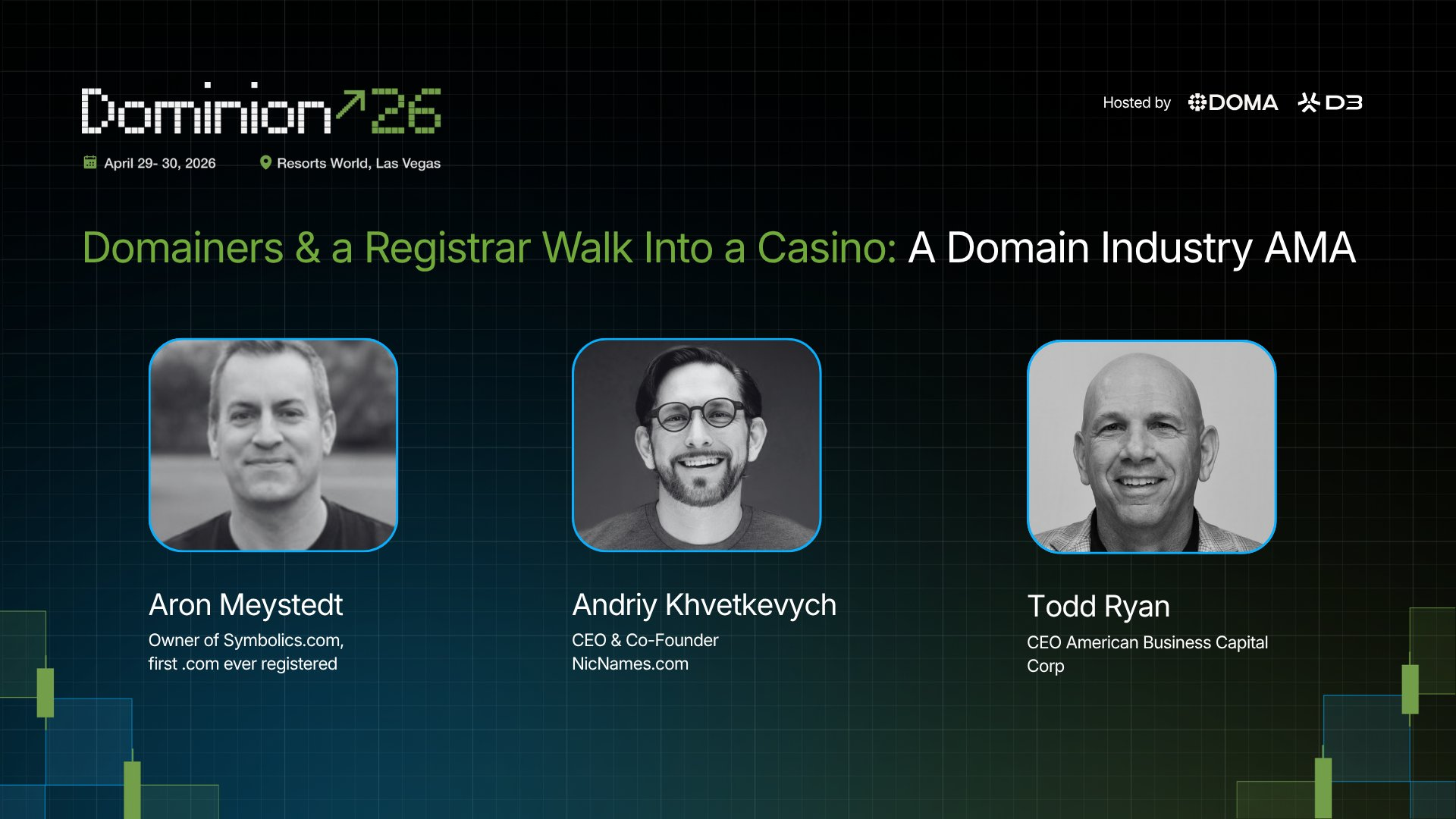
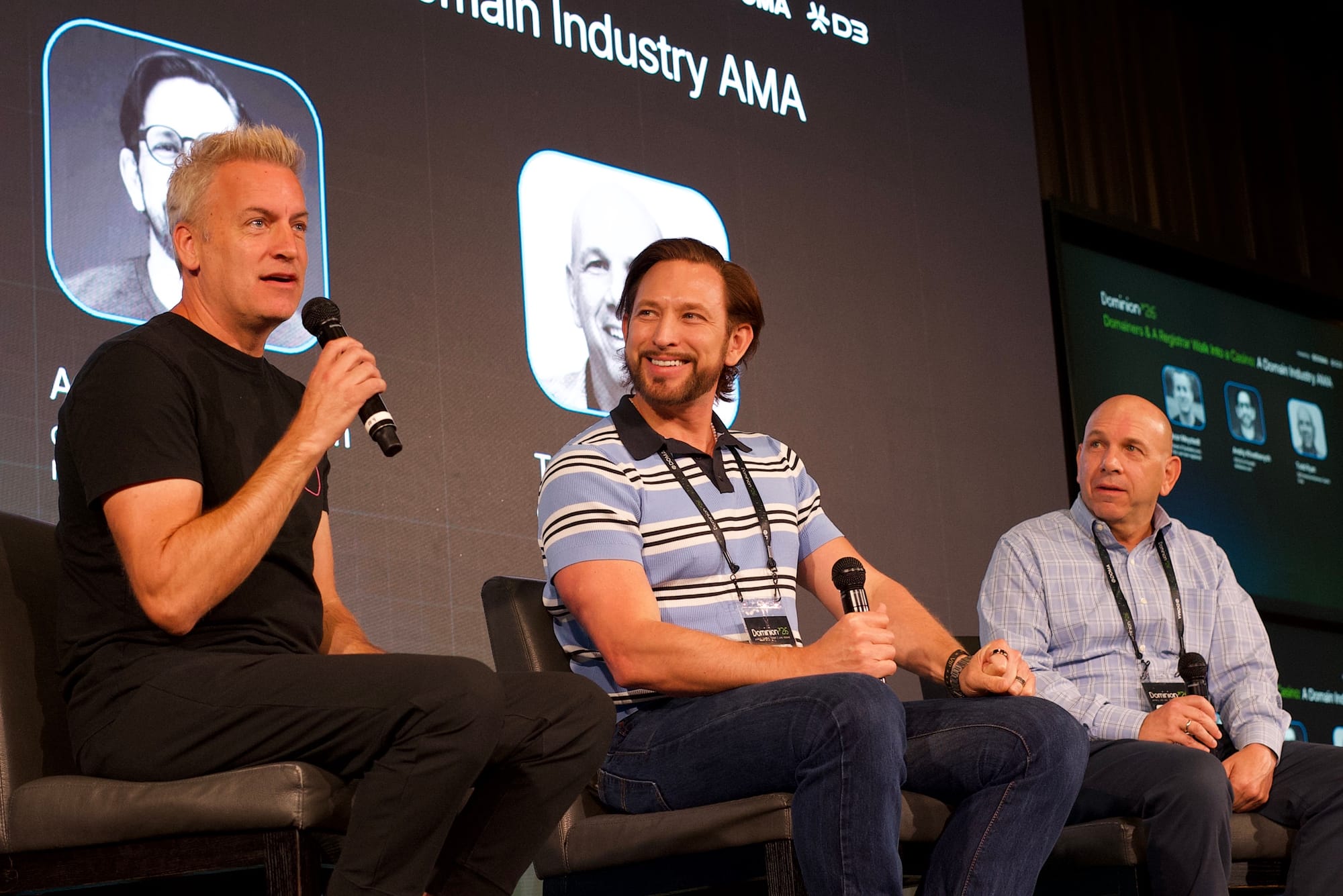
Before lunch, Aron Meystedt (owner of symbolics.com — the world's first registered domain) and Andriy Khvetkevych (Co-Founder & CEO, NicNames) joined moderator Todd Ryan (American Business Capital) for an open industry AMA. The conversation ranged from the history of the domain secondary market to the practical questions traditional domain holders have about going onchain. Meystedt's presence alone — someone who owns a literal piece of Internet history — grounded the DomainFi discussion in where this industry actually came from.
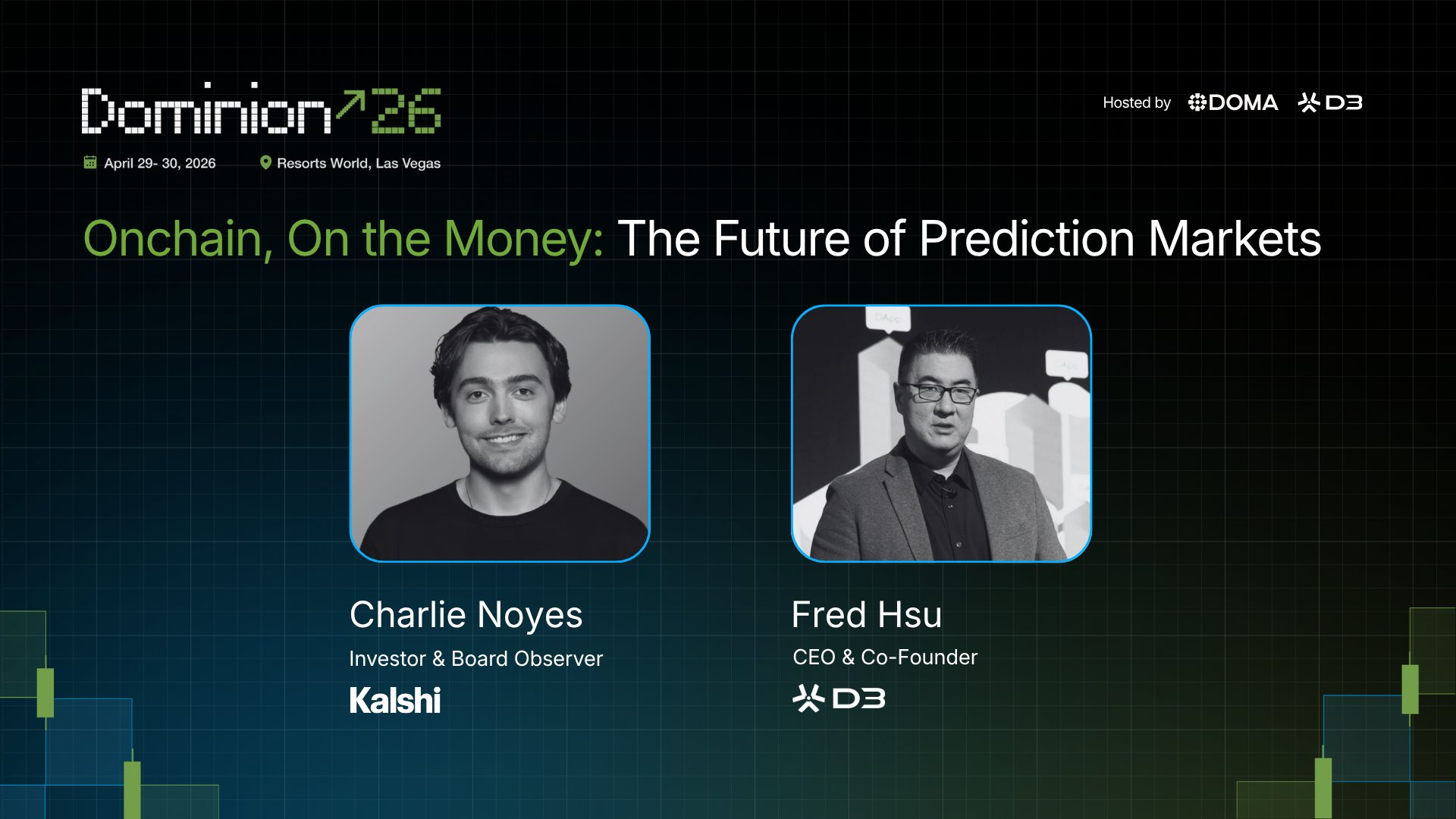
The afternoon anchored around two firesides. Fred Hsu and Charlie Noyes (Kalshi) explored the future of onchain capital markets and where domain assets fit within it.
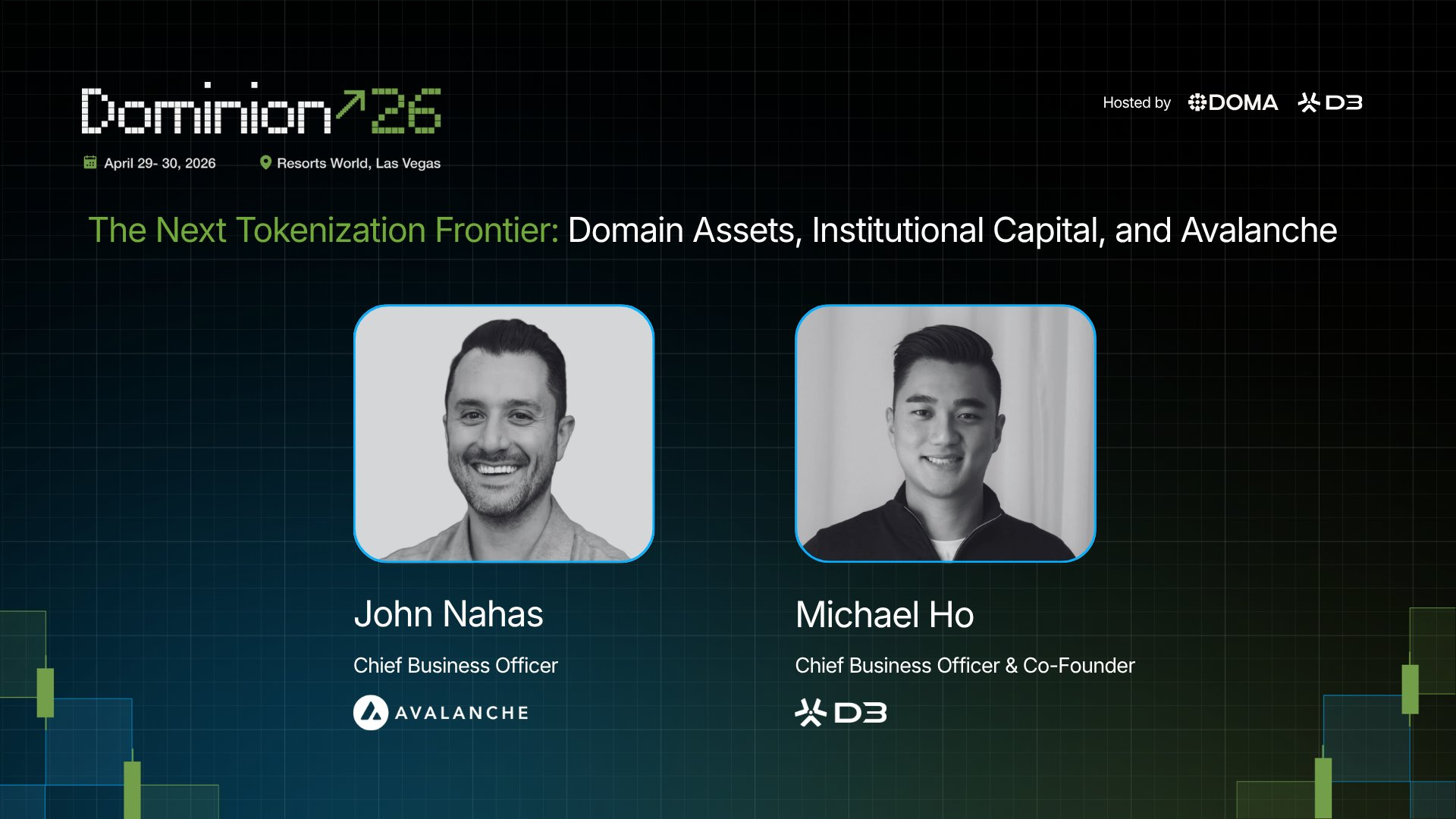
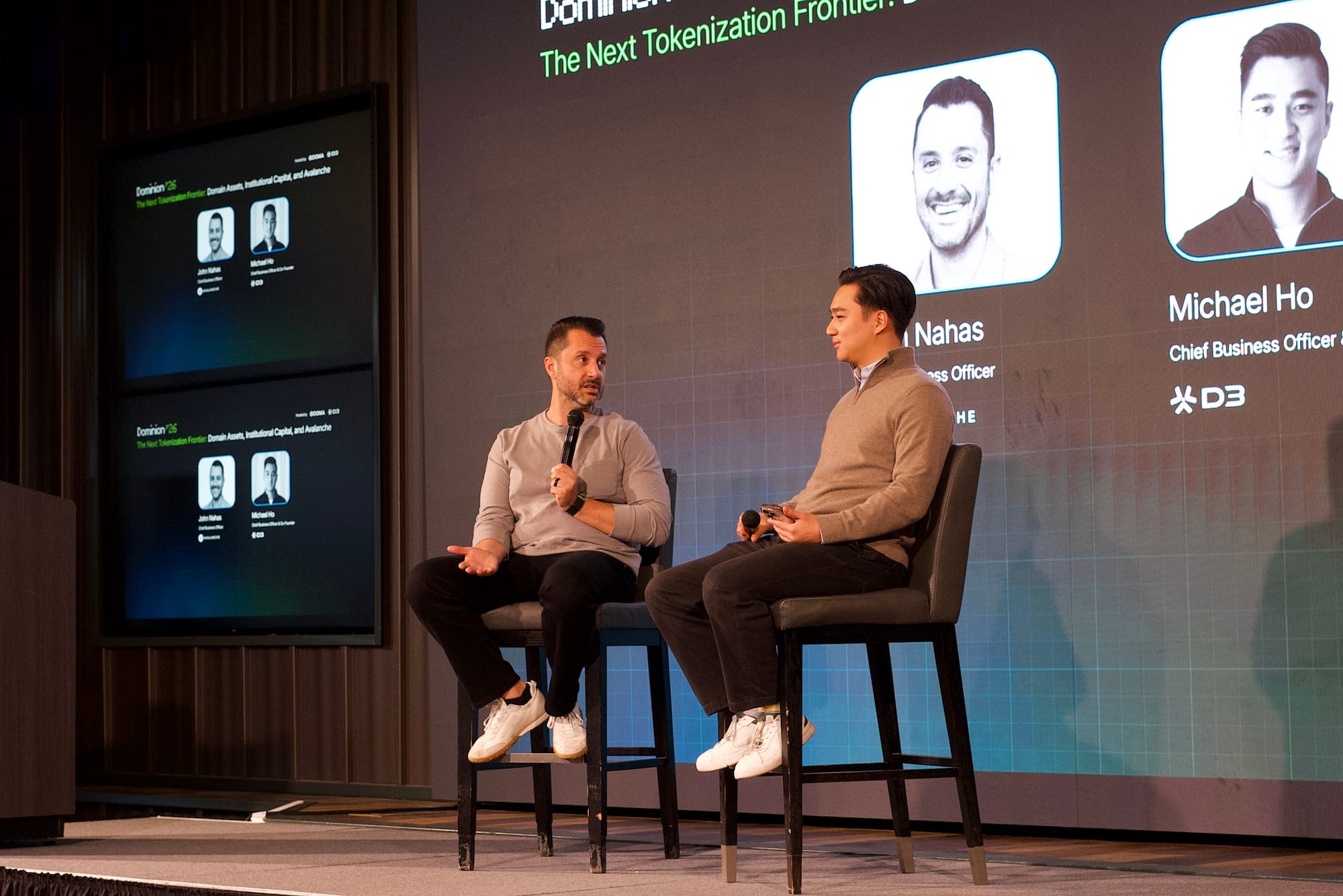
Then Michael Ho and John Nahas (Avalanche) dug into the institutional tokenization frontier with Avalanche's signal that tier-one ecosystems see the domain economy as serious infrastructure.
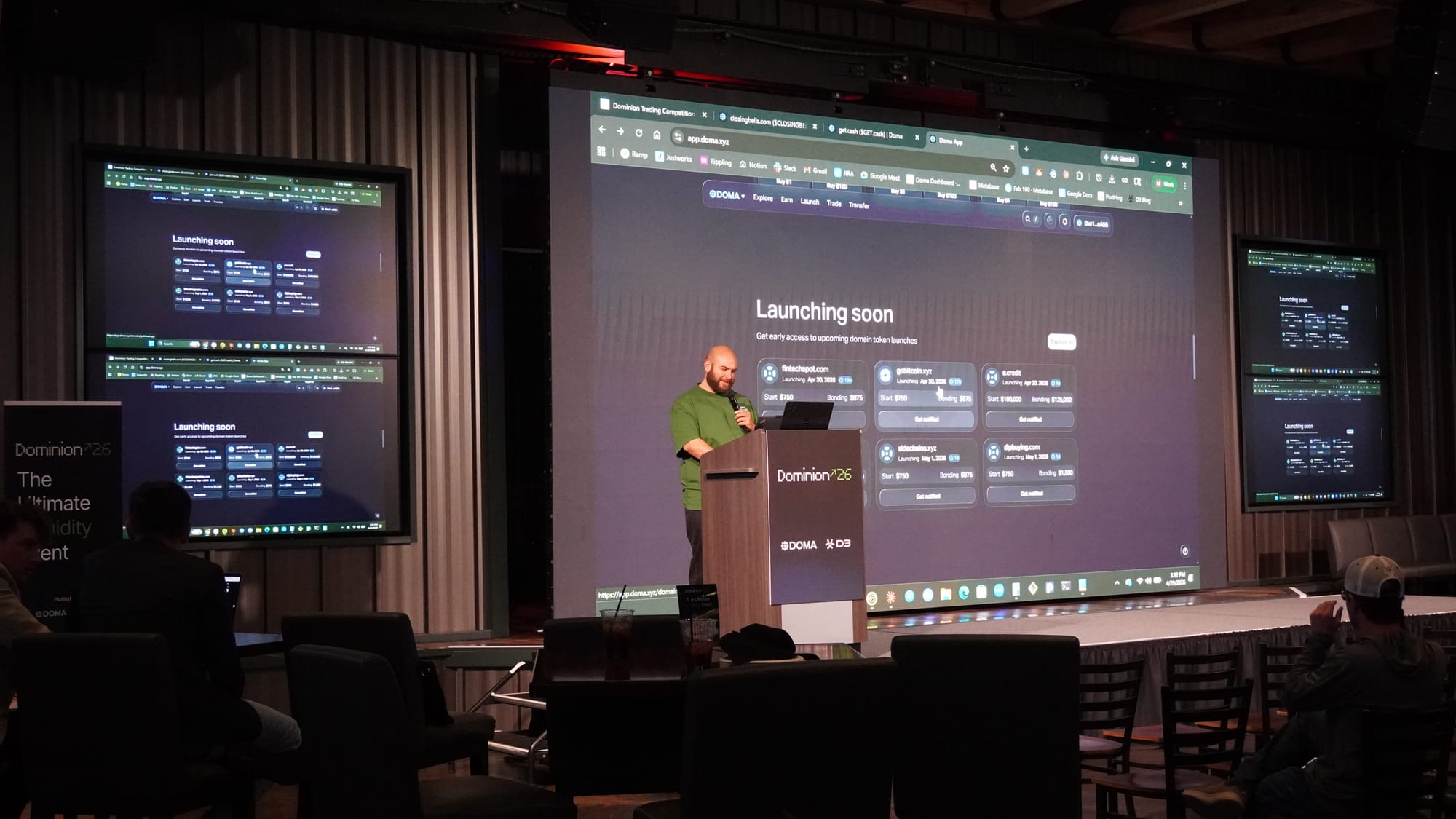
Day one closed with Ready Trader One: a live $10K USDC domain trading competition run on Doma's production infrastructure, with get.cash and closingbells.com launching on stage as the competition ran. The winner was announced at the cocktail reception.
Day Two: DomainFi in Practice and the $70M Moment
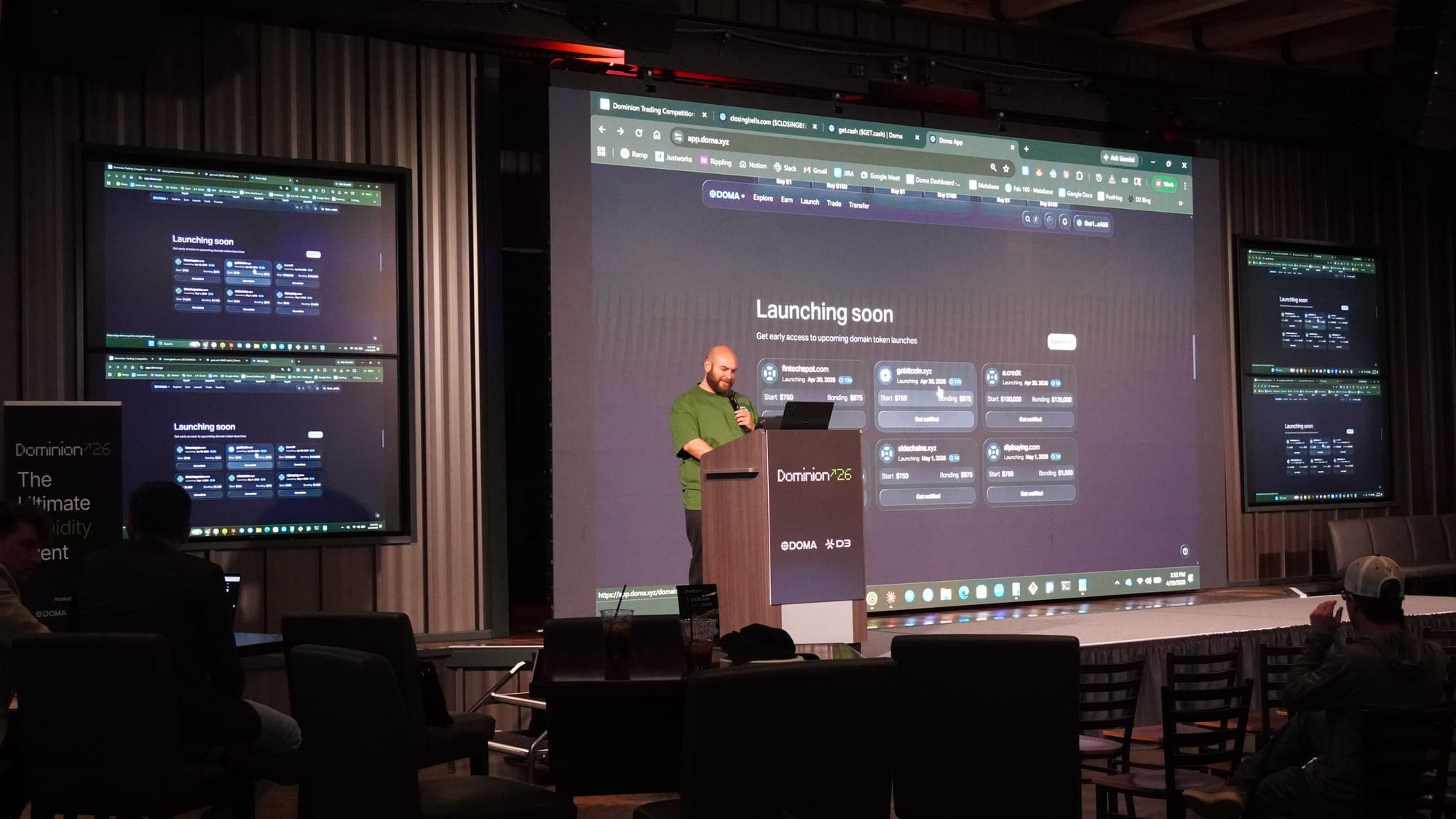
Thursday opened with a DomainFi 101 session. This is what DomainFi looks like in practice: real assets moving to real wallets in Las Vegas. Matt Smith (Partner Operations, D3) opened the session with a DomainFi 101 walkthrough and the live token launch of gobitcoin.xyz.
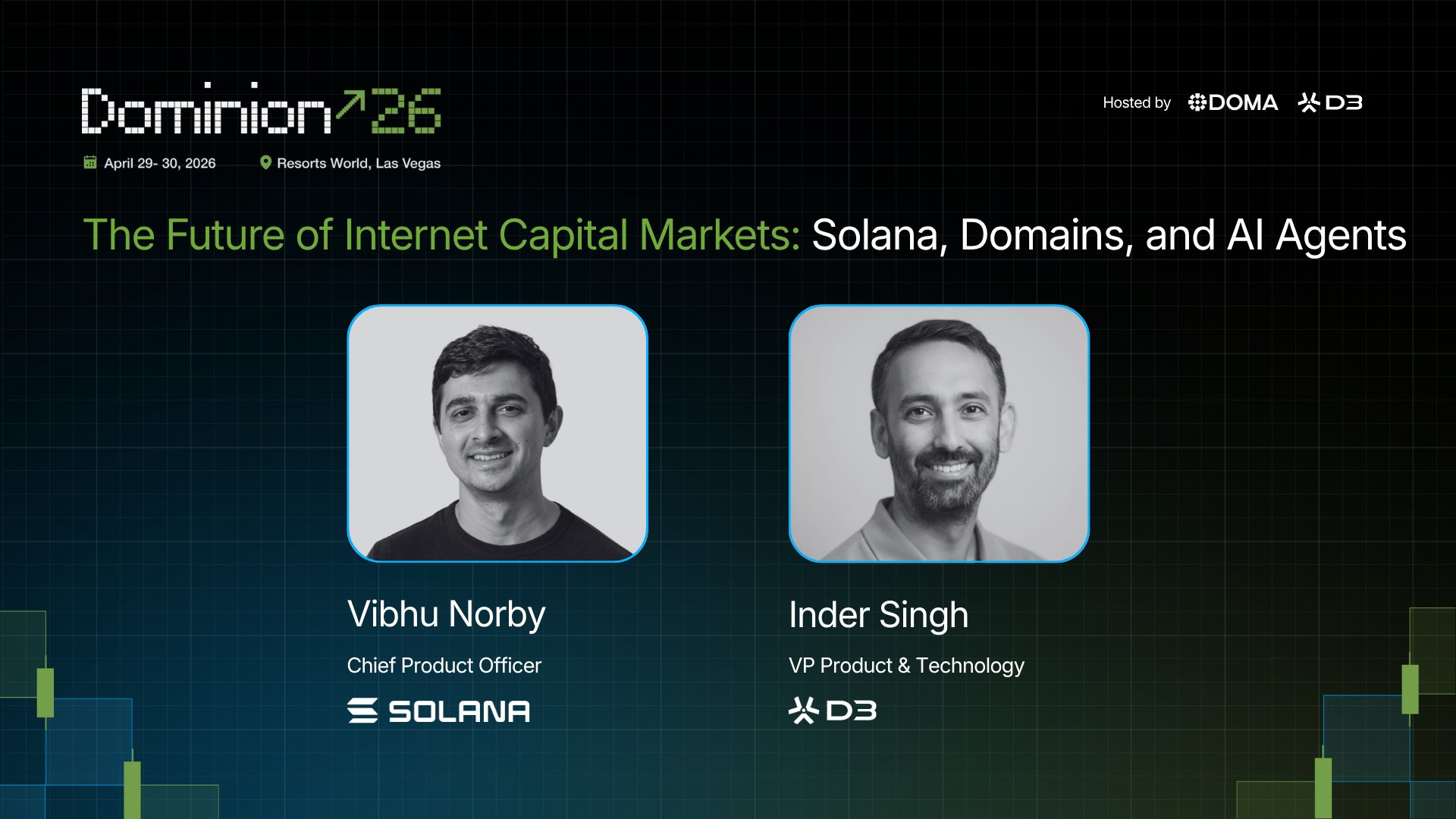
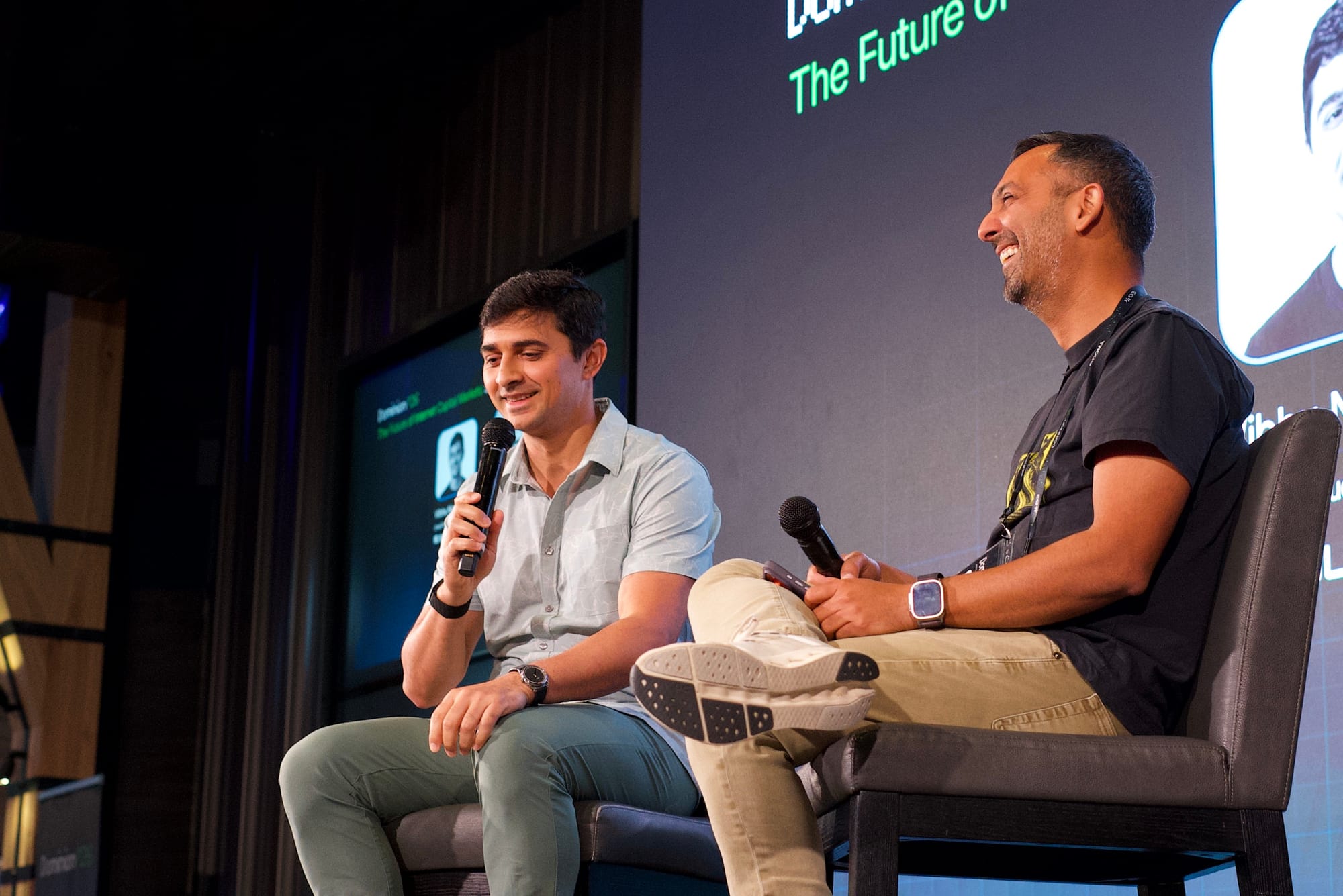
Vibhu Norby (Solana's CPO and Interim CMO) joined Inder Singh (VP of Product & Tech, D3) for a fireside on the convergence of blockchain infrastructure and AI agent identity. The core question: as agents proliferate and need persistent, verifiable identities, what naming layer do they resolve to? Domains are the natural answer and Solana's scale makes this consequential.
Doma is bringing a new RWA to @solana soon:
— vibhu (@vibhu) April 30, 2026
Tokenized baskets of 100k+ premium domain names listed in secondary marketplaces, representing billions of dollars.
Holders get paid on each sale.
One of the most ambitious attempts ever to rewire the $10 billion domain industry. https://t.co/54WtxhNSA8
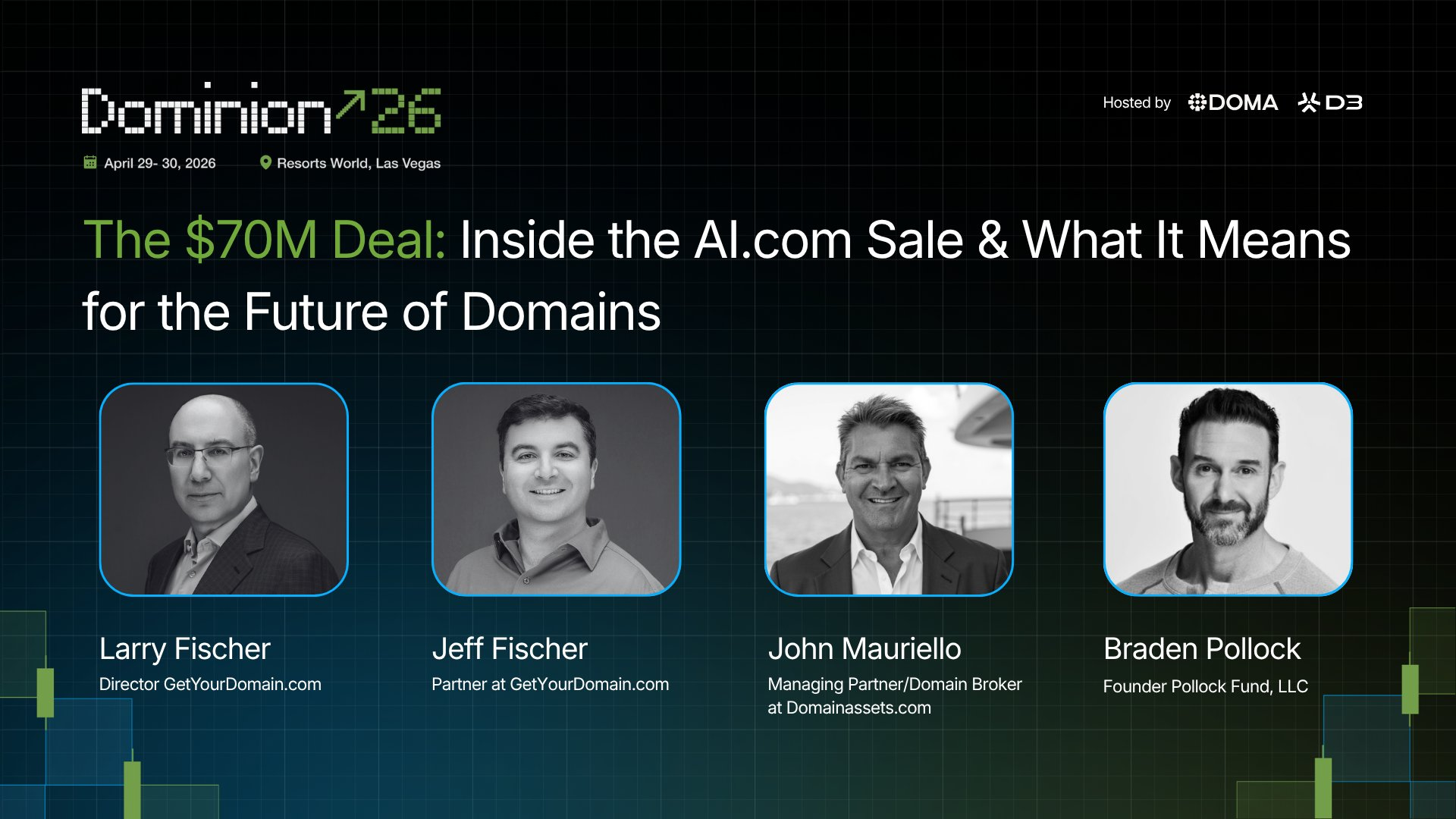
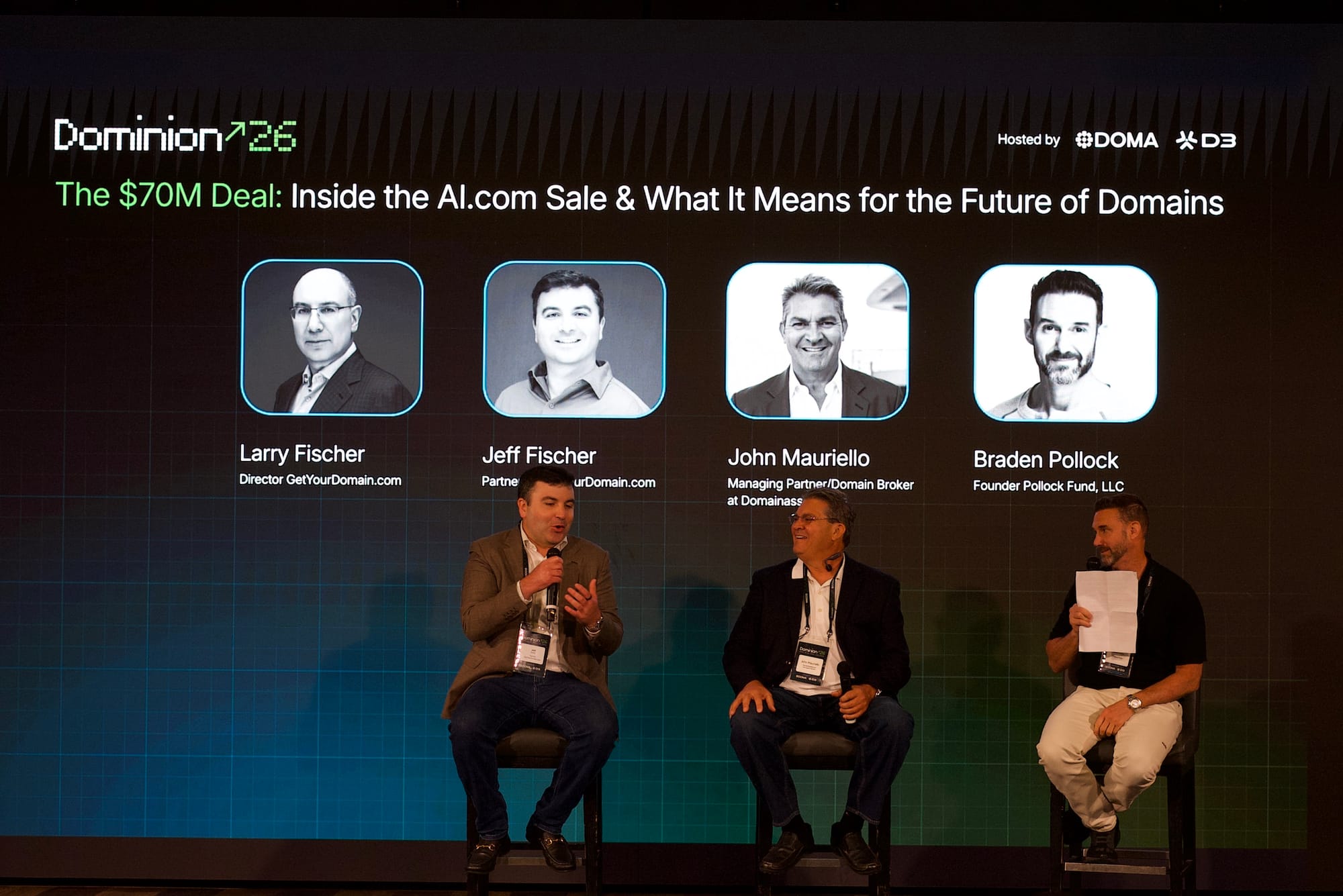
The session that generated the most conversation was the inside account of the $70M AI.com sale, one of the largest domain transactions in history. Larry Fischer (GetYourDomain.com), Jeff Fischer (GetYourDomain.com), and John Mauriello (Domainassets.com), moderated by Braden Pollock (Pollock Fund), broke down how the deal came together and what it means for the DomainFi thesis. A single domain at $70M validates the scarcity argument. The infrastructure being built around it is the real story.
Doma OnAir, Live from Dominion
We also brought Doma OnAir directly to Dominion’26. The livestream gave the community a closer look at the energy on the ground, the conversations shaping DomainFi, and the key moments unfolding across the event.
Tune into the recording here 👇
What Dominion 2026 Told Us
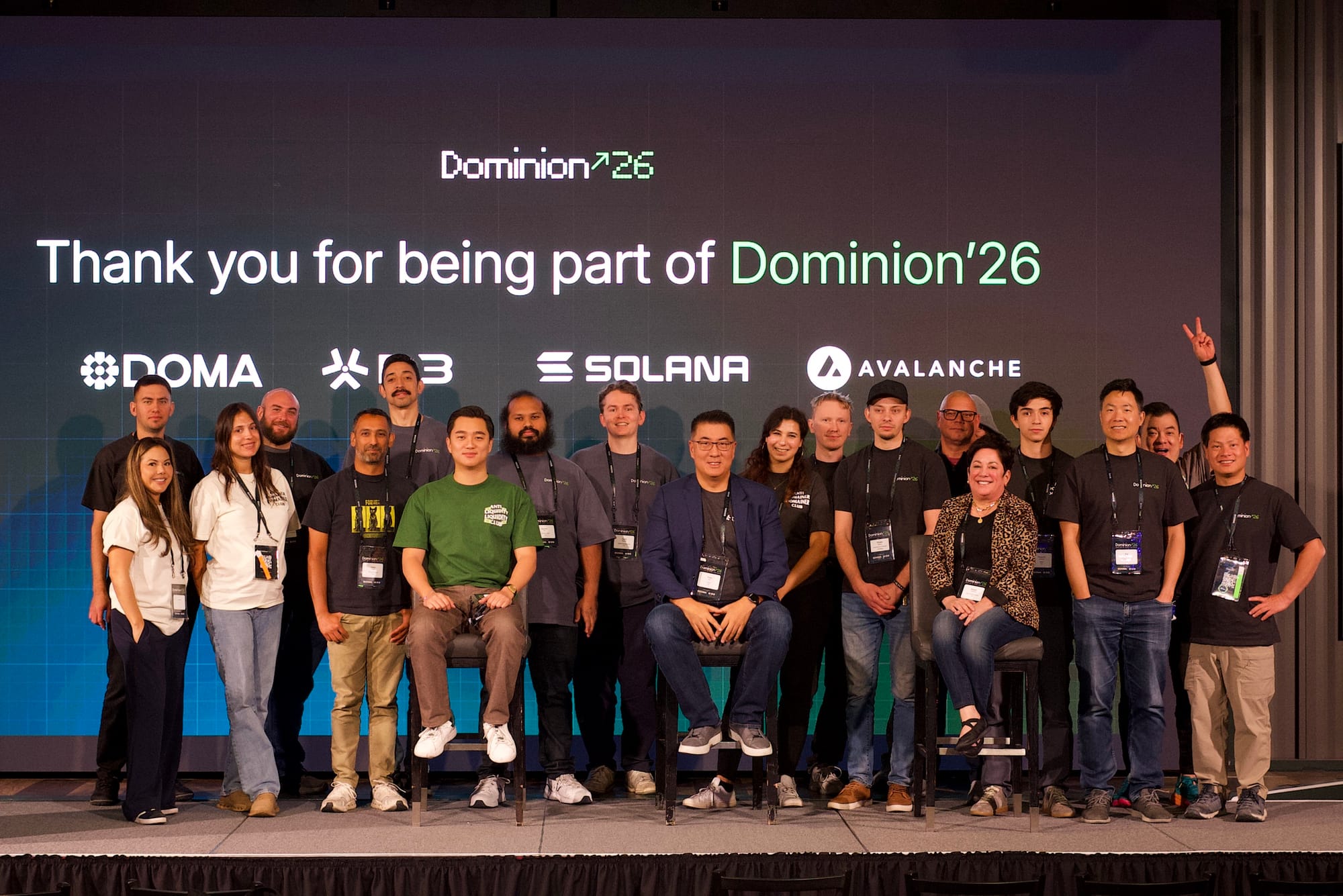
A year ago, DomainFi was a framework. Today it is a functioning market. In a full room of domainers and Web2 operators, we saw live token launches, trading competitions on production infrastructure, two new product launches, and firesides with leading ecosystems like Solana and Avalanche, this is no longer theoretical.
We also came away with an incredible amount of valuable feedback from across the ecosystem, which we are already processing and that will directly shape what we build next.
The conversations in this room are no longer about whether domains become liquid digital assets. They’re about how fast and who leads it.
Thank you to everyone who joined us and helped make it happen.