WebSummit and Breakpoint: Agents are already at the door

By Inder Singh, CTO, D3
This month I was at Web Summit Lisbon and Solana Breakpoint London. The same question kept coming up in both: what happens to identity, access and payment when the user is an agent?
Web Summit Lisbon: Agentic traffic is already here

My main takeaway: agent traffic is no longer a forecast. Companies with US customers already see a lot of personal agent traffic. Adoption among EU users is still low, and a few people joked that Europe trails the US by months. That misses the point. A European site with US customers is visited by agents today, whether or not its home market has caught up.
Agencies, CMS builders and commerce teams all asked for the same things, in the same order.
- First visibility: what agent traffic is hitting my sites?
- Then control: which agents get in, and what can they do? Monetization is right behind, because publishers and data providers want to be paid when an agent reads their content or calls their tools, including through MCPs.
The practical way to reach those publishers is through the people who run their sites. A CMS platform, an agency or a consultancy manages many sites at once. If DNA is part of their setup, every site they run can see its agent traffic, instead of one install at a time. DNA starts by watching and changes nothing about how a site runs, so a partner can turn it on for all its clients without risk to any of them. That is why channel partnerships were the biggest opportunity we found.
Where domains fit
Identity is becoming a requirement for agents, and several standards are emerging at once. GoDaddy's Agent Name Service (ANS) links an agent to the domain behind it. Cloudflare's Web Bot Auth (WBA) lets a bot prove who it is. More will follow. Whichever ones win, the idea is the same as it has always been: a domain is how you identify who is on the other end. D3 has a lot of experience building these technologies, and we are big proponents of them.
Payments teams are starting to pay attention too. Identity and payments are the two things an agent cannot act without.
What's the impact?
A site that can't see its agent traffic loses in three ways:
- Missing top of the funnel. Agents research and compare before a person ever visits, so your brand is being judged in a stage you can't see.
- Dropped users. An agent that gets blocked or can't get through the door goes to another site, and the person behind it never arrives.
- Blind to modern monetization. Without knowing who is visiting, you can't charge for it, including micropayments and agentic commerce.
Agents are ready. The internet isn't.
With Lunar Strategy we hosted an afterworks session on exactly this gap, with founders, builders and investors in the room. AI agents now research, compare and buy for millions of people, but the internet underneath them was built for a human at a browser with a credit card in hand. When the customer sends an agent instead, four basics break: who the agent is, how it pays, what it is allowed to access, and whether anyone can trust what it does.
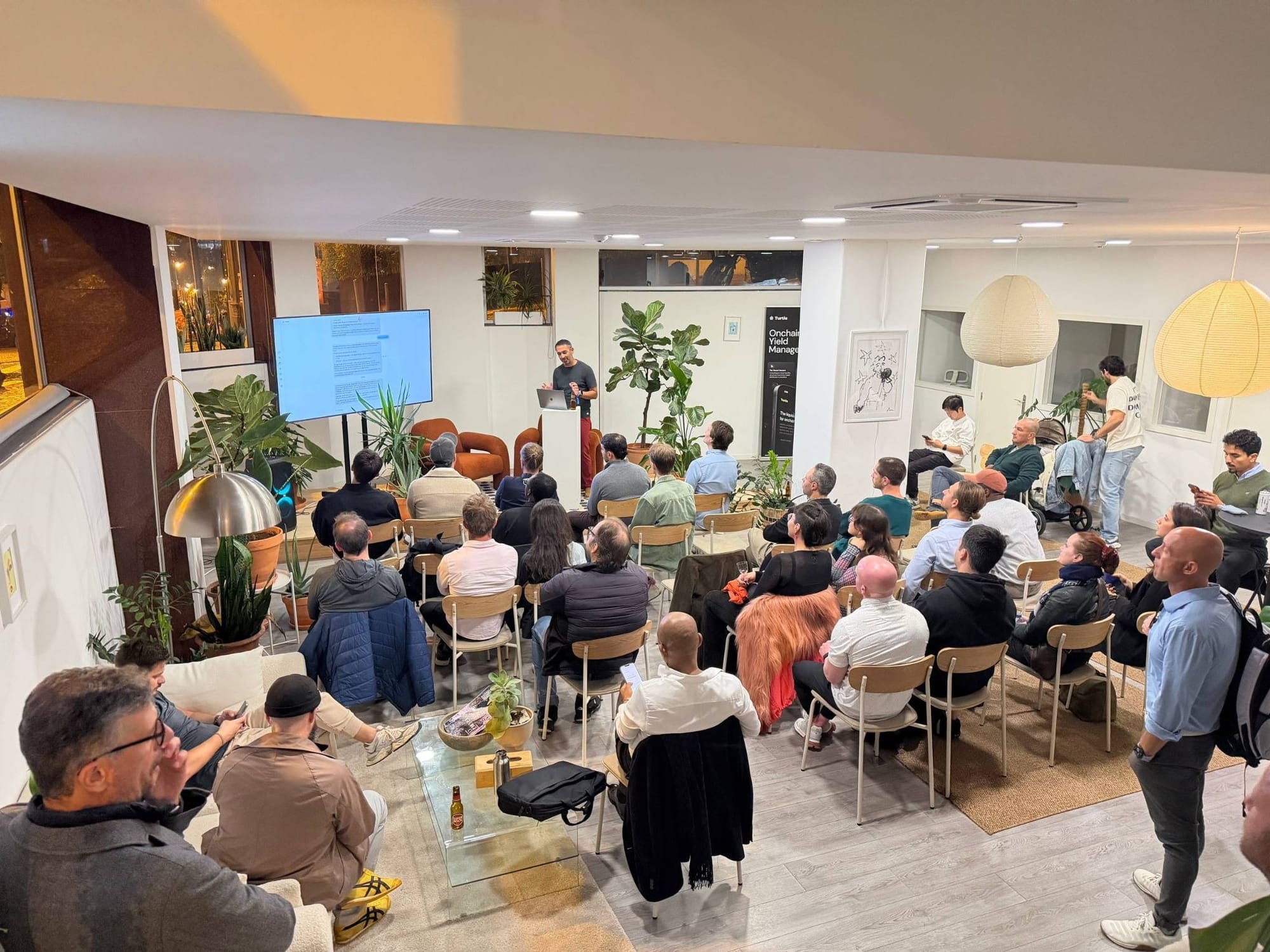
On stage: seeing the agents
The site side of that problem is the one I find most neglected. Most sites can't tell an AI agent from a person. Analytics count visits, but they don't show who or what is behind them, and agent traffic is growing too fast for publishers to keep guessing. We also ran a live demo. A website turned on payments and received 1 cent from a Muse user in real time. It is fun to watch, and it shows how small the step from visibility to getting paid can be.
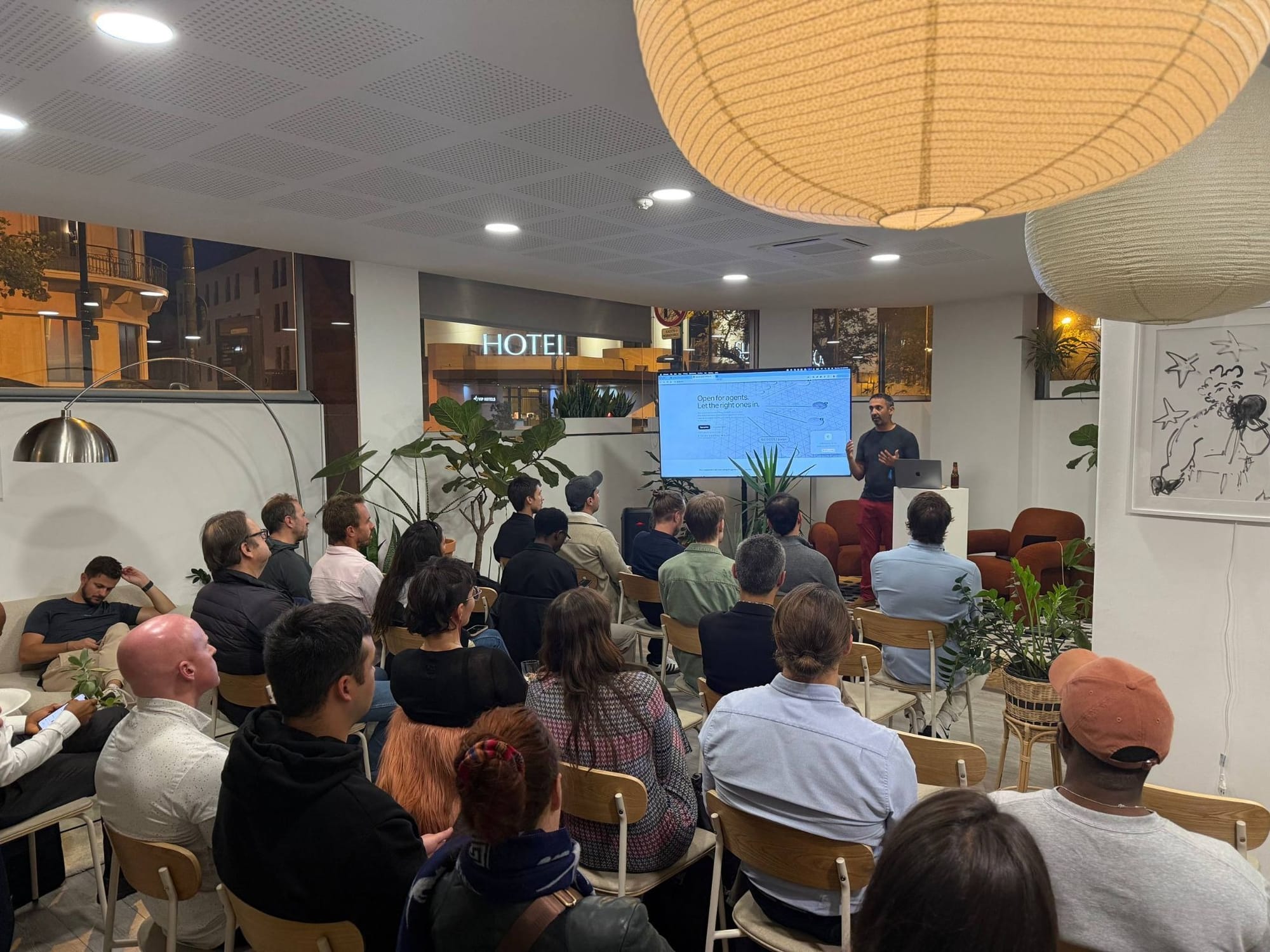
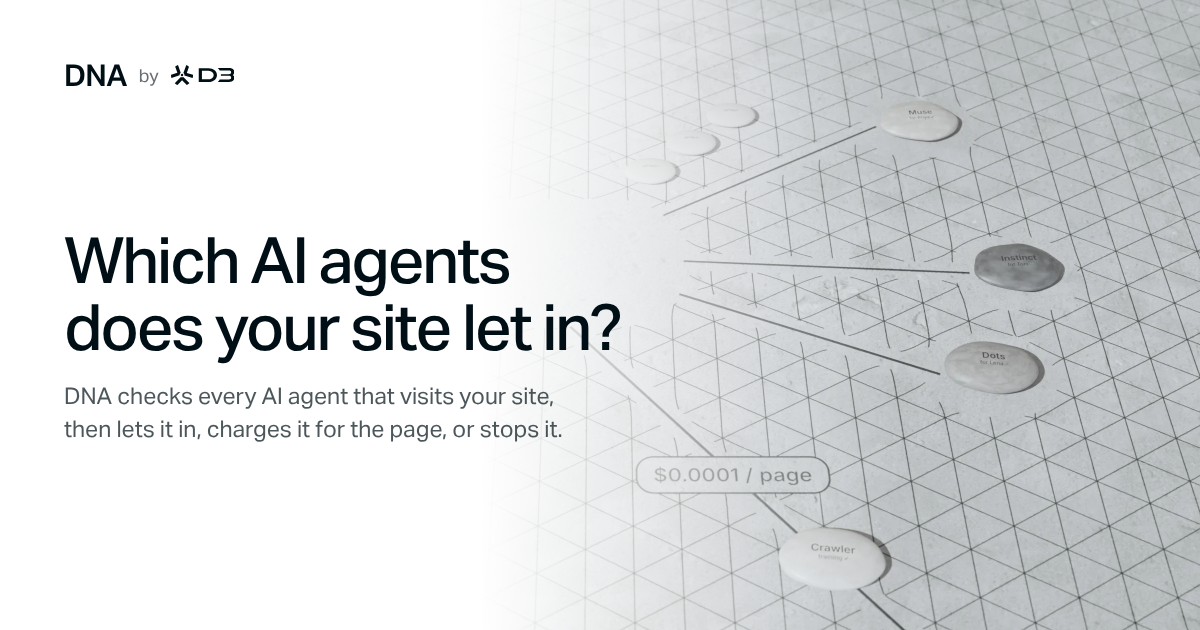
That is what we built DNA by D3 for. It gives publishers visibility into the agentic traffic reaching their sites, and control over it. It starts by watching: installing it changes nothing about how your site runs, so you can see what is already arriving before you decide what to allow. It is free for every site and takes about ten minutes to set up.

Solana Breakpoint London: the other half is payment
In Lisbon the question was how agents get recognized at a site's door. In London it was how they pay once they are through it.
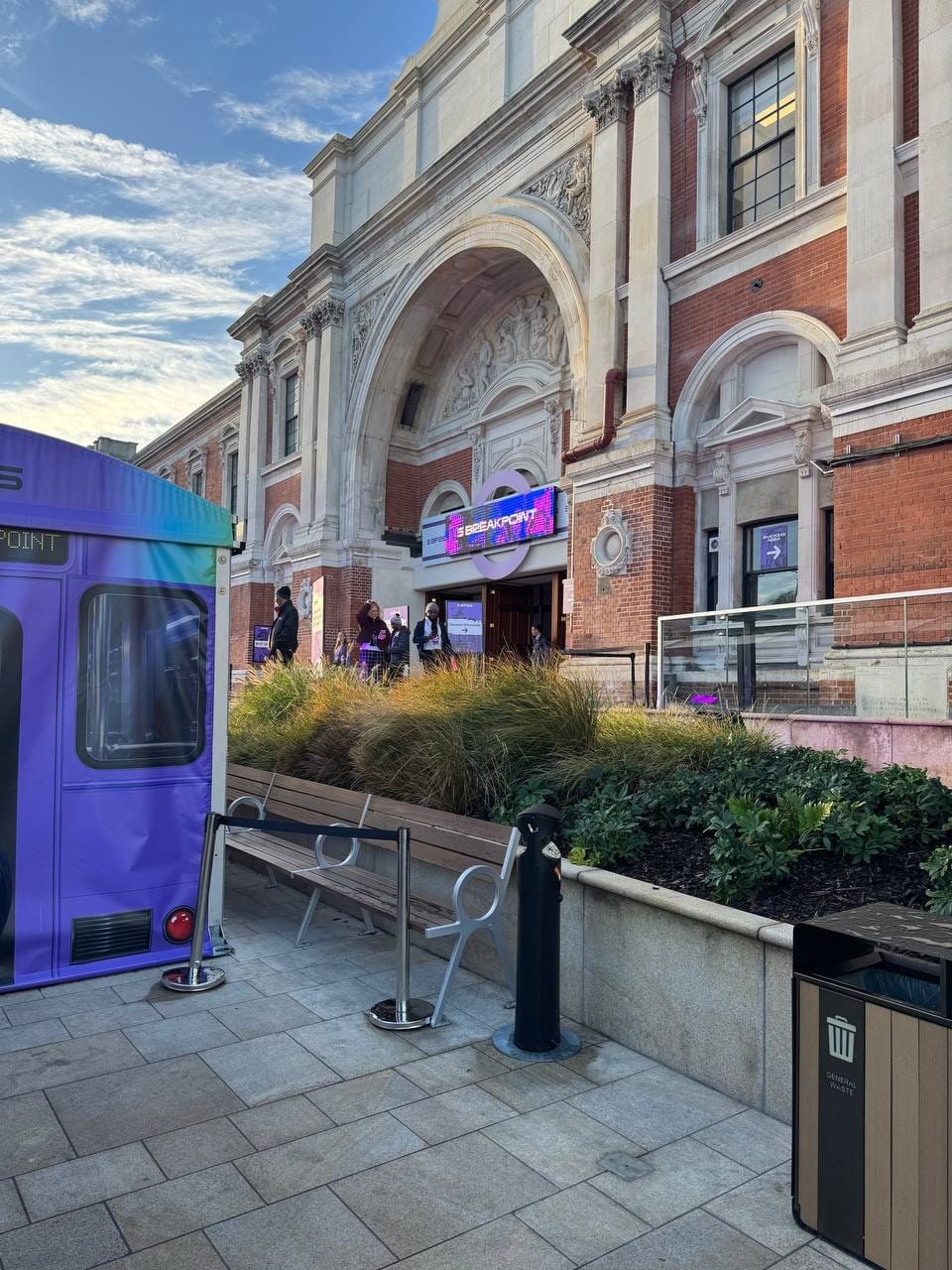

I can sum up the week in three words: Solana is money. Across the conference, AI agents using wallets came up as a natural fit, not a stretch. A wallet is a key pair, and a key pair does two jobs an agent needs: it identifies the holder, and it moves money with no card and no human at checkout.
That brings me back to the open question from Lisbon: how does an agent prove who it acts for? A wallet gives the agent a key. A domain can give that key a name people already trust. Programmatic payments are the key to agentic commerce. An agent can't type in a card number or click through a checkout, but it can pay in code, per request, with no human involved. That is what makes micropayments, like a cent for a single visit, practical.
It also didn't feel like a bear market. The energy and enthusiasm stayed high throughout, and the same thing came up from person after person: it was the best conference they had ever been to, and the community was a big part of why.


Within a few years I expect agents to be an everyday part of site traffic. Publishers can't stop that, but they can decide what happens next: see which agents arrive, check who they act for, and charge the ones that take value from the site. DNA is free and takes about ten minutes to set up.
Catch my interview with TokenRelations at Breakpoint where we talk exactly about that 👇
WILL BUSINESSES THAT BLOCK AI AGENTS GET LEFT BEHIND?
— Token Relations (@TokenRelations) November 18, 2026
We caught up with @InderpreetSingh, Chief Technology Officer at @D3inc, the team behind @Domaprotocol, at @Solana Breakpoint to find out. He explained why banks and other websites are blocking agents, what they lose by doing… pic.twitter.com/PIA8DwUKHz
If you publish a site, run hosting or build for agents and want to talk about any of this, learn more about DNA by D3 or get in touch.